
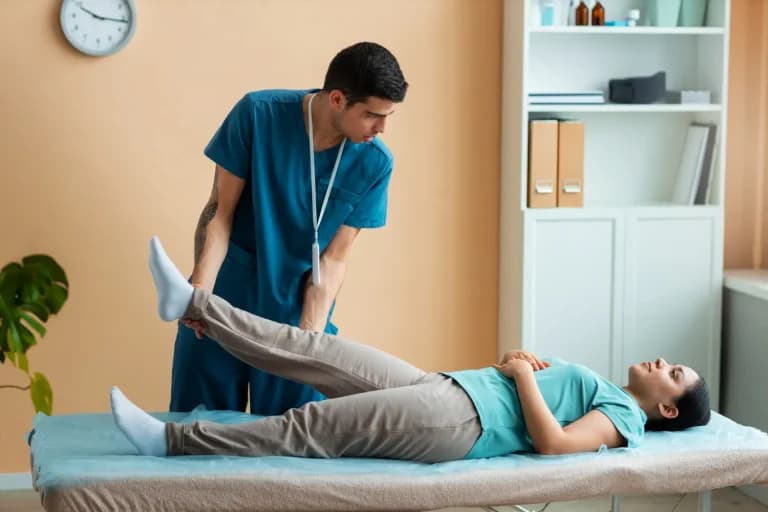
Whether it's an ACL reconstruction, a rotator cuff repair, or a total hip replacement, the surgery itself is roughly 20% of your outcome. The other 80% happens in physiotherapy over the following three to six months.
Weeks 1-2 focus on protecting the repair, controlling swelling, and restoring the small ranges your surgeon has cleared. For a knee, that means getting full passive extension back early — missing extension at this stage is one of the top predictors of long-term stiffness. For a shoulder, it's protecting the repair while gently mobilizing the scapula.
Weeks 3-6 introduce active motion and the first layers of strength, always within surgeon-specified limits. This is where patients often feel 'stuck' — the dramatic early progress slows and the daily exercises feel repetitive. Trust the timeline: tissue remodeling is happening even when it doesn't feel like it.
Weeks 7-12 are the payoff phase. Resistance increases, functional patterns return, and we reintroduce sport- or work-specific movement. Watch for red flags at any stage: new sharp pain, sudden loss of range, swelling that doesn't settle overnight. Those are conversations to have with your physio and surgeon — not reasons to push harder on your own.